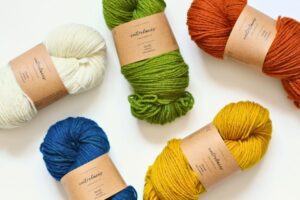


Over the last year, I’ve been lucky to have had quite a few in-depth conversations with sheep breeders, agronomists, and experts in sheep genetics about how we could harmonize meat and wool production so that the supply chain makes sense for everyone.
When the wool industry tanked at the end of the last century, most sheep breeders in Canada were forced to take a different approach to their production. They went from owning animals that were dual purpose (meat & wool) and sometimes even triple purpose (meat, wool, dairy), to owning animals whose only viable product was meat.
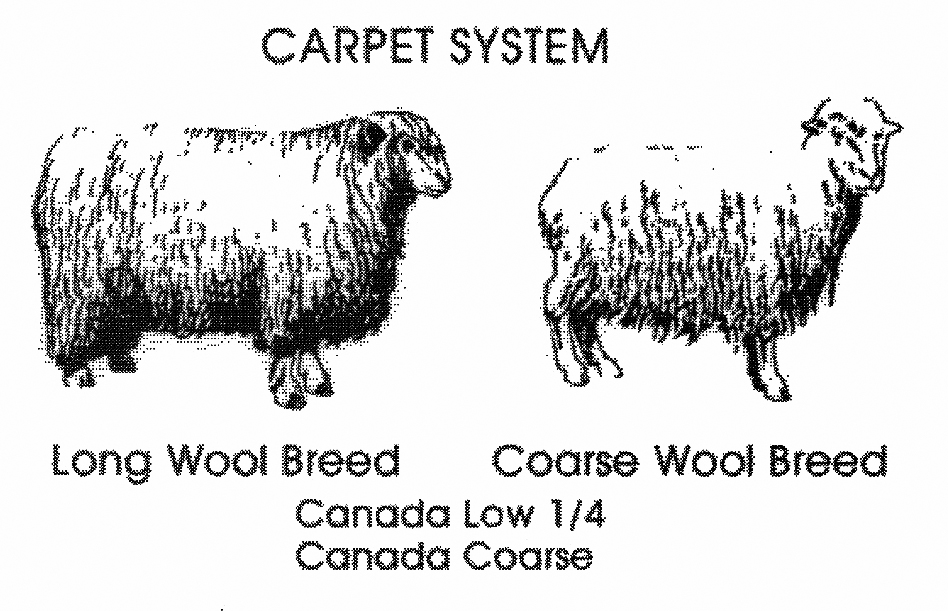
Obviously, when the market shifts so drastically, you start to focus on the factors that could improve the remaining viable product and reduce your costs. In the case of sheep, this often meant to choose breeds that made many lambs, had good mothering instincts, and whose lambs were heaviest when ready to go to market.
In turn, the commercial ewe (otherwise known as the f1) came into the picture.
In a nutshell, the commercial ewe is a cross between a prolific pure-bred ewe and a maternal pure-bred ram. The prolific ewe’s genetics ensure that triplets and quadruplets are more commonplace while the maternal ram’s genetics ensure that the lambs will be tended to and will grow quickly and efficiently.
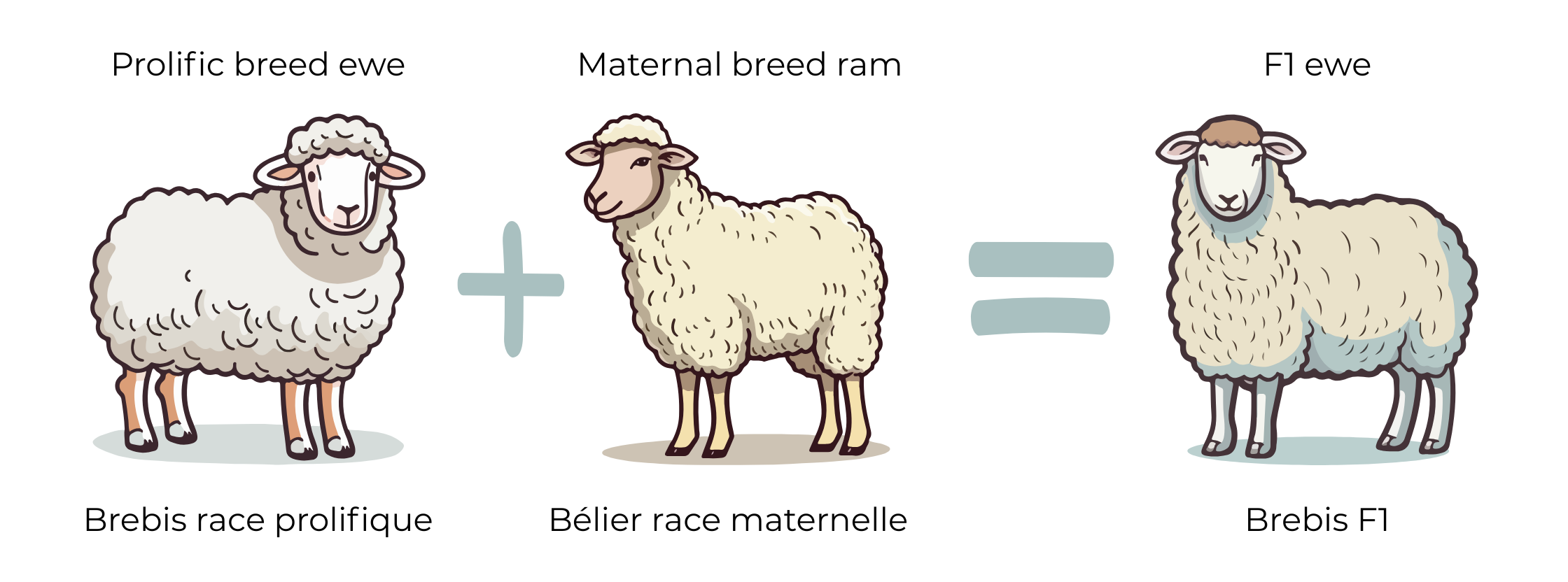
Thus, for meat production, the f1 ewe is truly a nearly perfect combination of genes. For wool on the other hand, not so great.
Unfortunately, when it comes to the expression of the wool gene in f1 commercial ewes, we often end up with one fleece that looks like it comes from two different breeds.
When I choose fleeces, I want to make sure that all the wool in a batch is as uniform as possible as this allows us to spin it properly and preserve elasticity without the need for a blend. With the lack of uniformity in f1 fleeces, it is nearly impossible to create a yarn that will not need to be overspun to prevent breaks, and overspinning results in an itchier yarn that lacks elasticity.
Although the f1 ewe is really the star of most breeders’ flocks, I wanted to test something different out. If we were to bring back wool as a viable ovine product, would the revenue from wool sales balance out the loss from choosing a pure breed?
One model that some breeders already use is the use of a terminal ram with a maternal or a prolific ewe. Let’s say a breeder wants Rideau Arcott (prolific breed, 2 or more lambs per birth) but is dissatisfied with the loss of profit due to their small carcasses. One option is to use pure bred Rideau Arcott ewes with a terminal paternal ram, which results in bigger lambs that put on lean weight quite easily. This method preserves the wool quality that we get from the pure-bred ewes while also ensuring that the lambs meet weight requirements for sale.
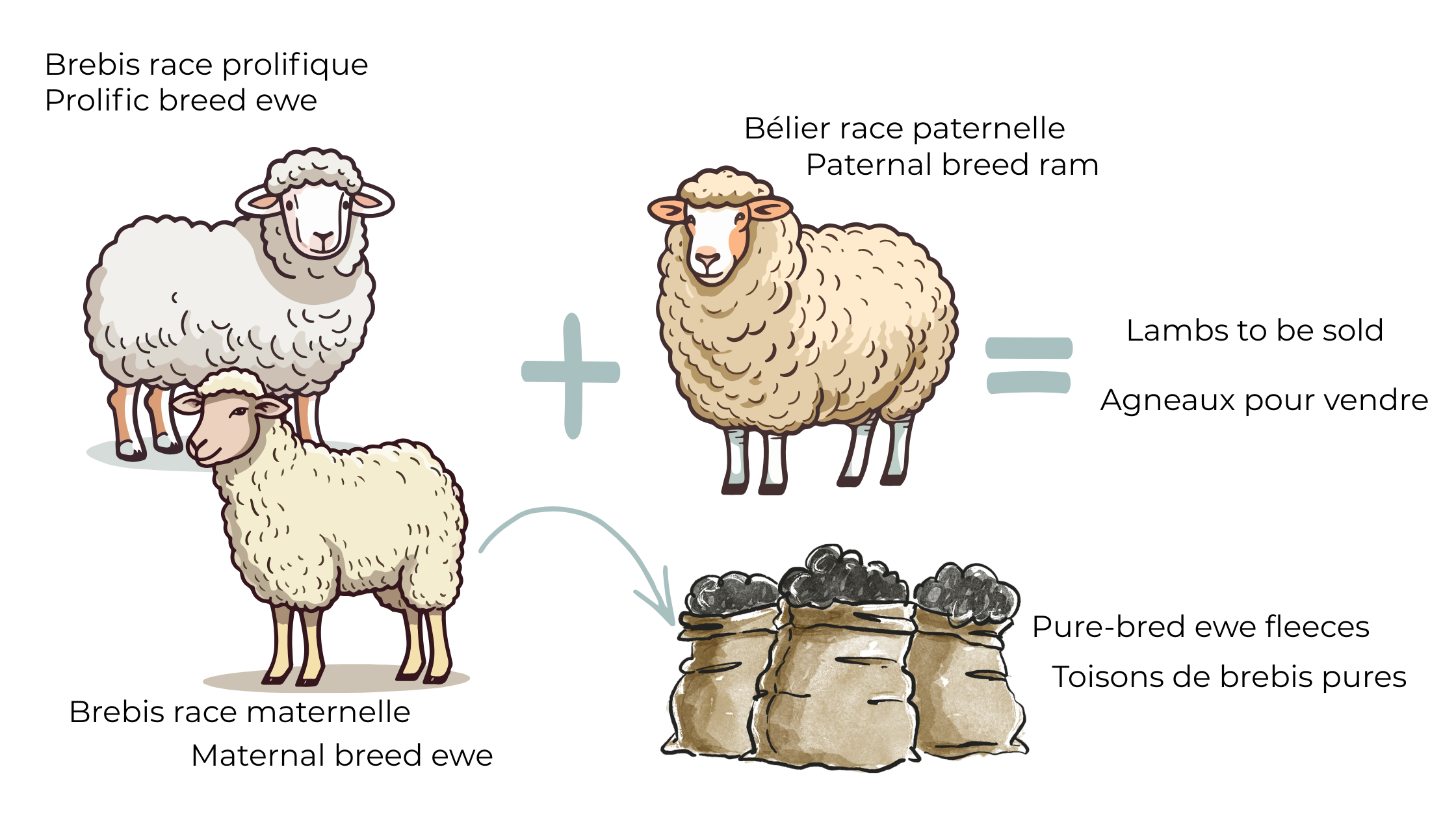
This can also be done with maternal ewes for breeders who don’t want to or don’t have the infrastructure to bottle feed the lambs that a prolific ewe would produce.
Now what’s left to test is whether this model will be economically viable in the long term, and that’s where market development comes into play. If people want local wool in large quantities, then we will be able to continue to buy fleeces from farmers and supply them with the income that will allow this model to persist.
So, all this to say, here’s to making our local wool more present on the national (and hopefully one day international) market!
References
Choix de race et croisement. SEMRPQ. “https://www.semrpq.net/race/”
Race maternelle. SEMRPQ. https://cepoq.com/wp-content/uploads/2019/06/Race-maternelle-et-terminale_OQ_ete_2018.pdf


