

A quality fleece is not necessarily a soft one. Wild concept right? I know.
On the international market, a finer fleece will often be prioritized and classified as “quality” while a beautiful coarser one is tossed aside. This is due to market demand and is not necessarily an indication of quality (although many soft fleeces are also of quality! More on that in a minute)
A quality fleece is a strong, uniform fleece that is easy to spin.
Let’s break down the criteria:
Uniformity of staple length
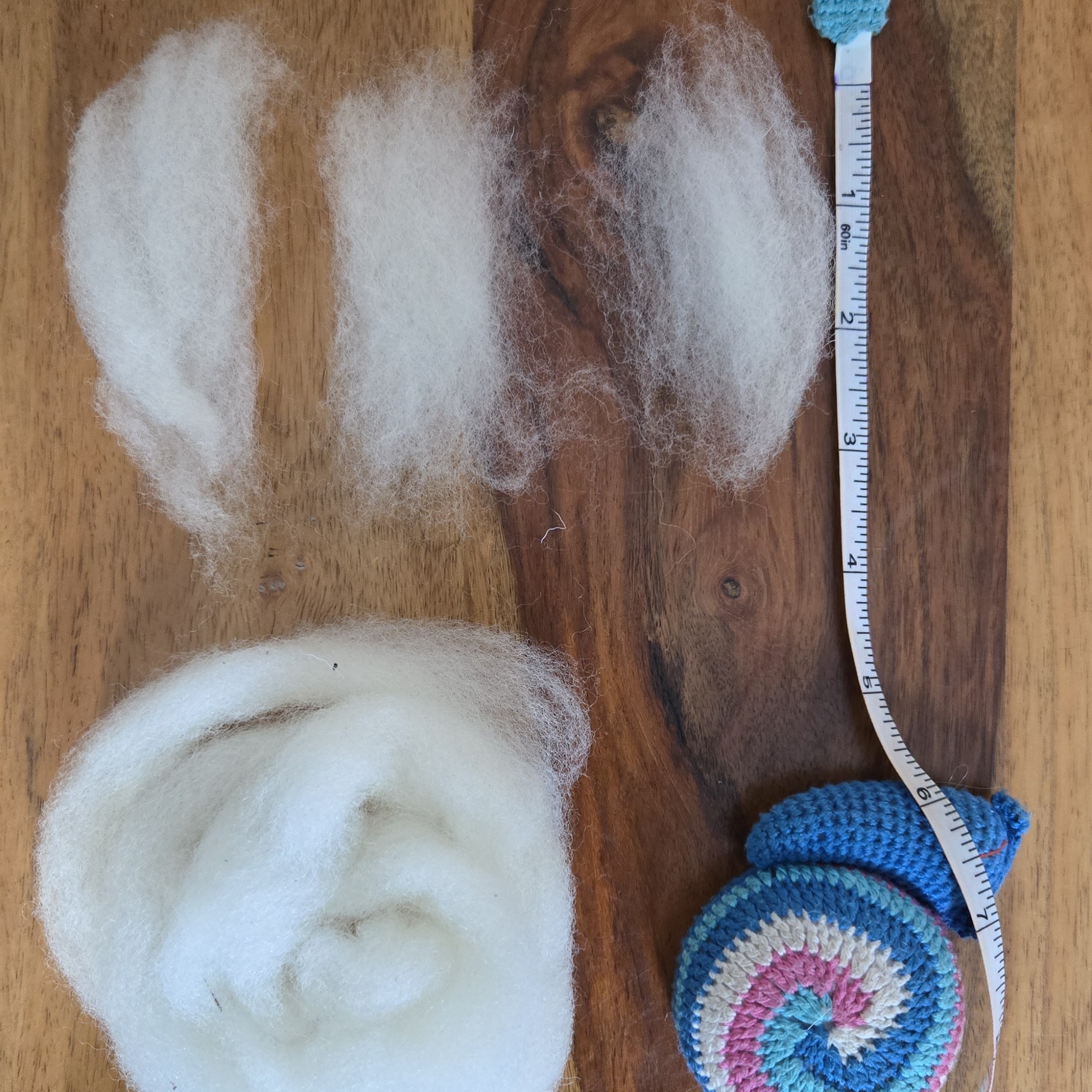
The length of the wool must be uniform across the whole fleece from shoulder to rump (+/- 2cm).
**Ideal staple lengths for most wool mills = 3-6“
When drafting the wool (gently pulling it apart right before spinning) we want a uniform staple length so that we could keep a consistent draft.
If the length of the fibers are uneven, the yarn will break more often as we are drafting.
Uniformity of crimp
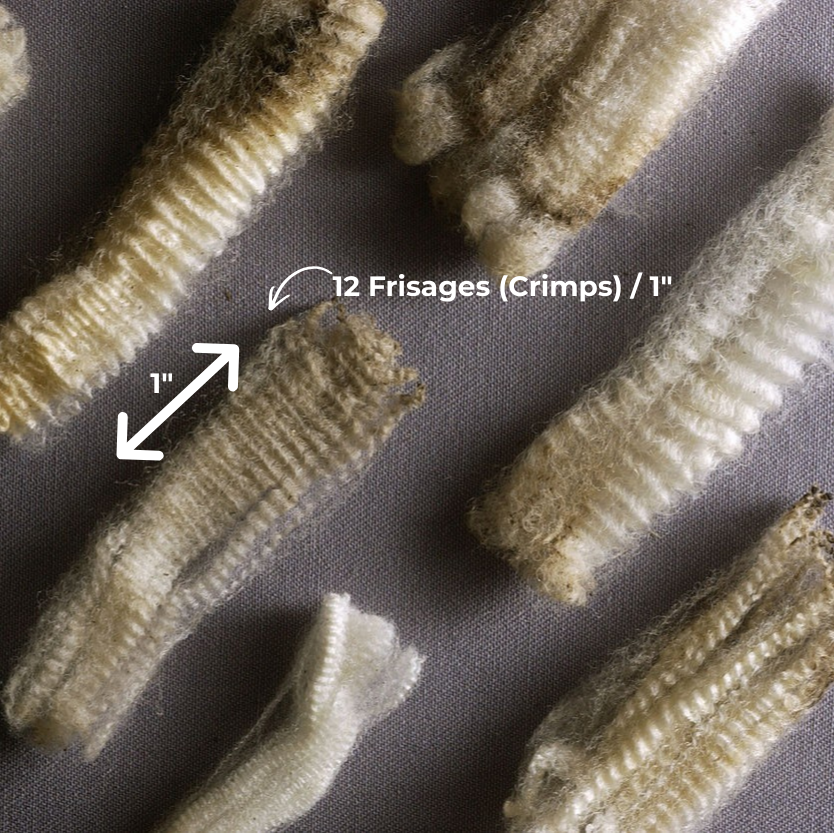
Crimp = the curly pattern on the wool
I look for a crimp that is even across the whole fleece from shoulder to rump (+/- 2 crimps per inch)
An even crimp is important because when we are adding twist to the yarn, we do so in function of the crimps per inch. If there are 7 crimps per inch, we add 7 twists per inch to ensure that we have perfect balance across the whole thread.
If half the fleece is at 3 crimps per inch and the other half is at 8 crimps per inch, then no matter what twist per inch we pick, part of the yarn will always be undertwisted while the other will always be overtwisted.
An unbalanced yarn leads to increased risk of breakage and pilling.
Uniformity of microns
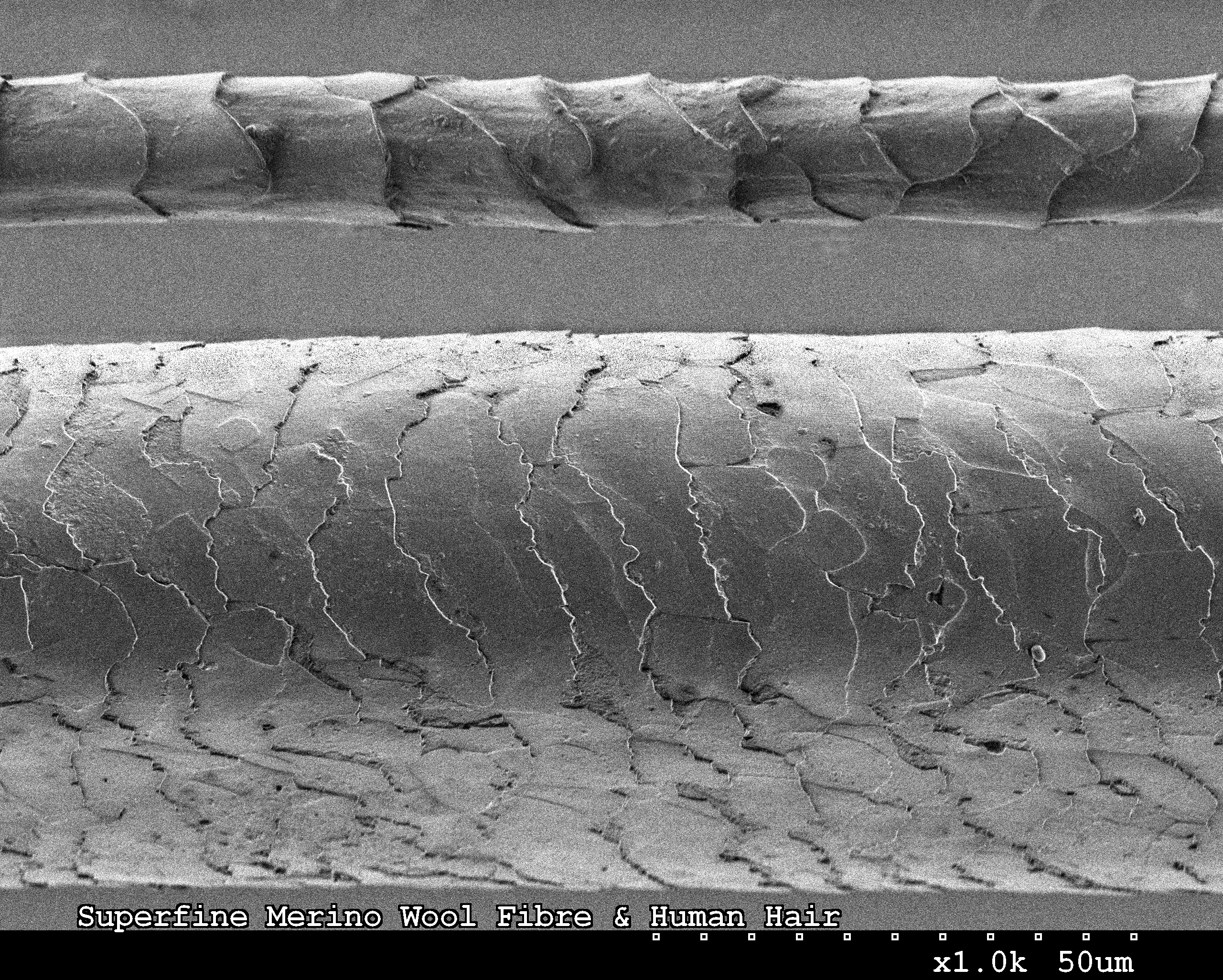
Micron = diameter of each fiber
I ensure that across the herd, we have a relatively uniform micron count.
This is analyzed under a microscope at our facility. (following the IWTO-08 standard for micron analysis)
Having a uniform micron count is important for quality control. We always want to make sure that each ball of yarn within the same collection has the same feel against our skin.
Conformity with breed standard
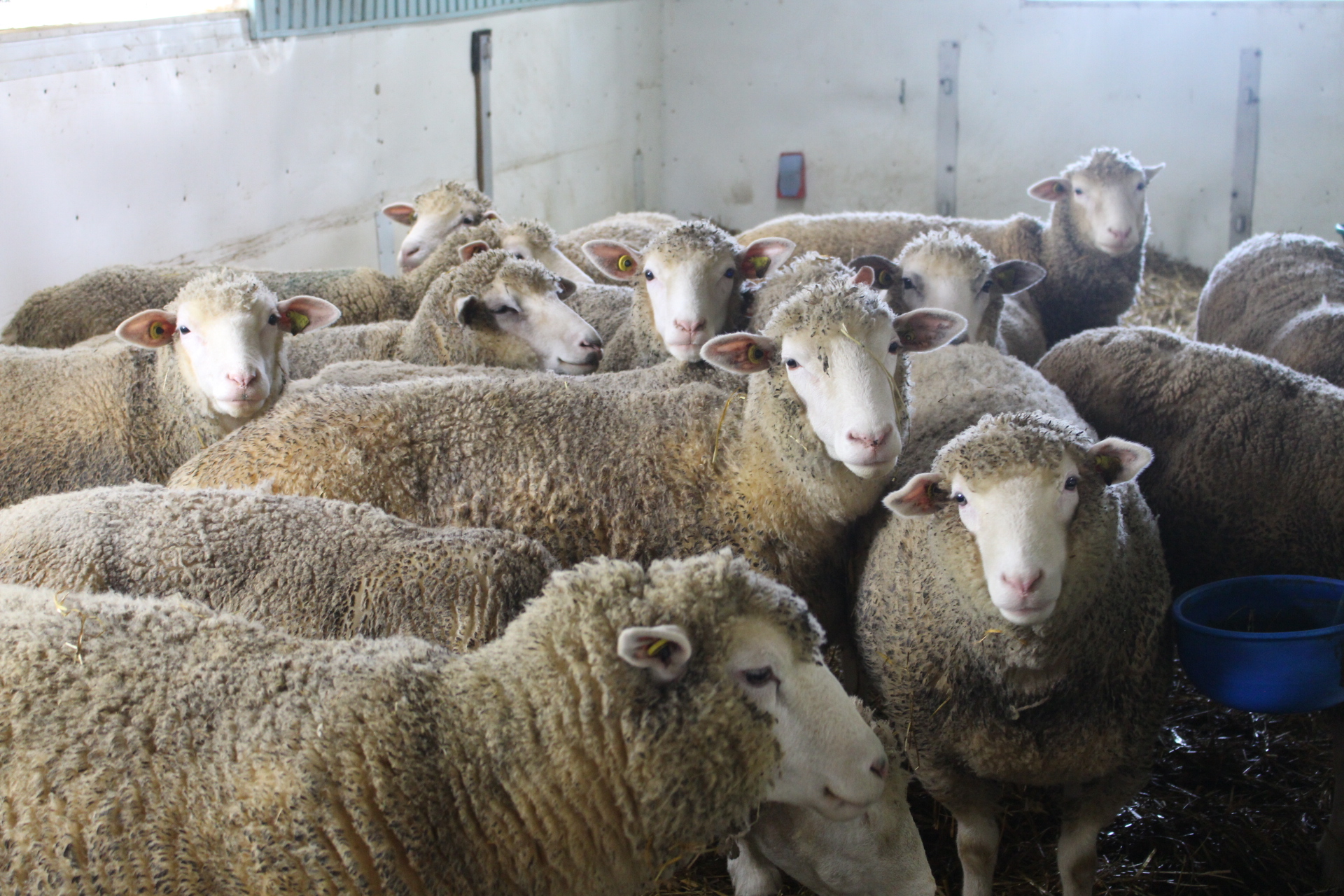
For each criteria above, each breed has a range that is accepted as being in conformity with the breed standard.
Let us use the Dorset sheep as an example. According to the breed standard, the criteria for wool should be the following:
It is important that the fleeces conform to the breed standard to ensure quality control.
When we mix wools of the same breed from different farms together to create a larger batch, the more consistent the fleeces are from farm to farm, the more consistent our batches will be.
Below are factors that disqualify a fleece from being processed into yarn:
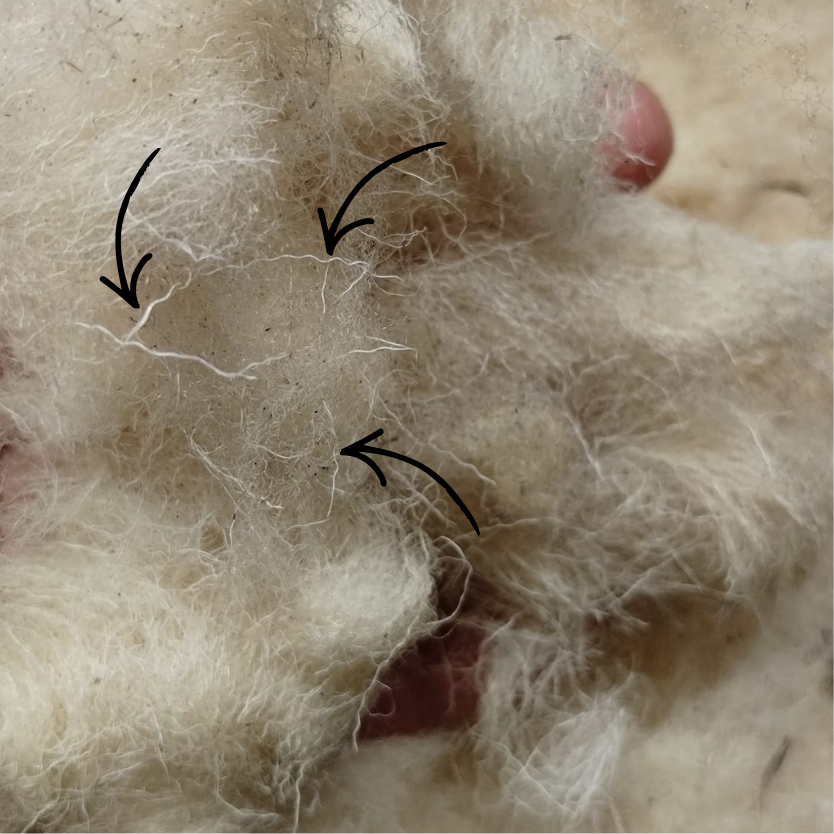
Kemp
Kemp fibers are hard and much coarser than the rest of the fleece.
We see this most often in Romanov cross-breeds but can also be found in other breeds of sheep.
Kemp is uncomfortable against the skin and does not take dye well.
If there is kemp present, the fleece is immediately disqualified.
Burrs
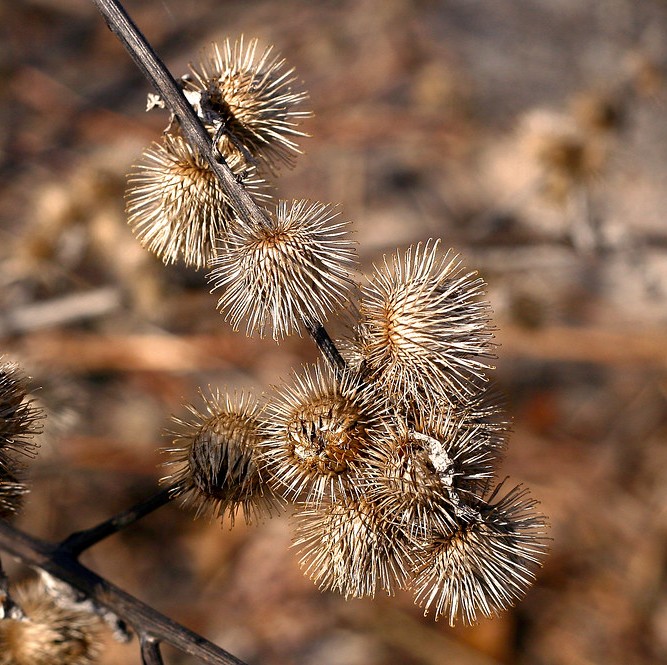
Burrs are very difficult to remove from a fleece.
If we try to remove them, the process very often damages the fiber and the machinery, resulting in a brittle fleece that breaks apart when we continue the transformation process.
Staining
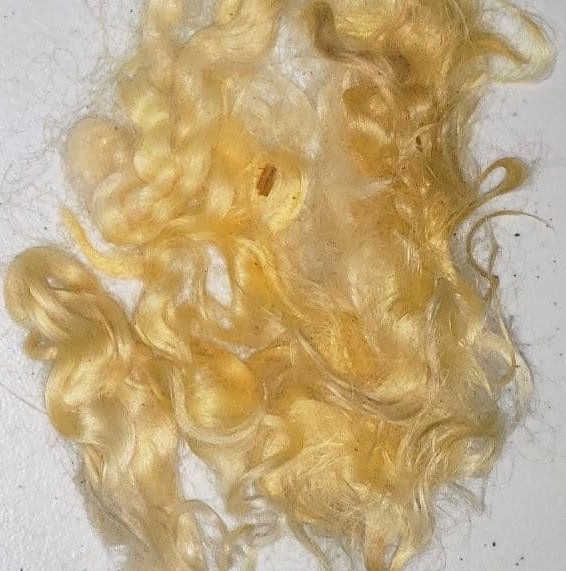
Dark orange and bright yellow staining does not wash away and results in a base wool that is extremely inconsistent in color.
This poses a quality control problem when we dye.
Furthermore, certain yeasts and funguses that cause staining also damage the fiber, resulting in a weaker wool.
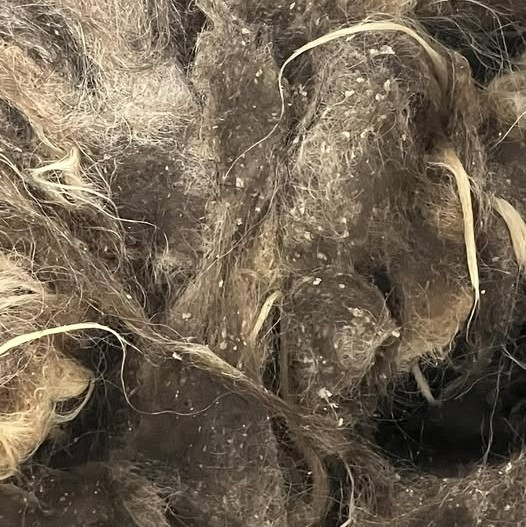
Scurf
Scurf is dandruff mixed with lanolin and it is impossible to get out of the fleece.
When wet, scurf turns into a paste that coats the wool, damages machinery, and feels extremely unpleasant and waxy against the skin.
Scurf often happens when sheep are exposed to excess humidity due to delayed shearing, or too much time in the rain without being able to dry out in between.
This causes skin irritation, which causes the dandruff.
Excessive vegetable matter
Excessive vegetable matter is any amount of vegetable matter that covers more than ⅓ of the length of wool.
Excessive vegetable matter means that we will not be able to remove it all during transformation and there will be too much vegetable matter in the final yarns.
This poses a significant problem to those with grass allergies.
Weak fiber
When quickly pulling on a length of fiber at both ends, we want to hear a “ping” sound. If the fiber crackles or breaks, it is not strong enough to be passed through the machines and will be disqualified.
Felted fiber
Felting happens when wool gets agitated while humid or wet.
This can happen if your shearing was delayed, if they spend a lot of time in the rain, or if they often rub against fencing or barriers.
Felted fiber can not be pulled apart and therefore cannot be transformed.
Short answer, no.
Although there are a ton of beautiful fleeces out there, we simply cannot buy everything and this is due to market demand.
Although every fleece has its niche, it is our job to seek out which niches do best and attempt to work within them while slowly introducing new products to consumers who are not necessarily used to wearing and caring for wool garments.
While doing our market study, this is what we learned:
The problem with this statement?
So what do we do?
While we slowly develop products that will highlight the amazing properties of each type of wool, we will be buying fleeces as a function of what sells best at any given moment.
Every fleece has a purpose but some markets are larger than others, and that needs to be taken into account to ensure financial viability.
A healthy wool mill is one that makes executive decisions that ensure the perennity of our service, so that we can continue to be an essential link in the natural fiber processing chain here in the province of Québec.
If you have any questions, think your fleeces are quality fleeces, or want to work with us, don’t hesitate to contact olivia@entrelaces.ca for an evaluation!


